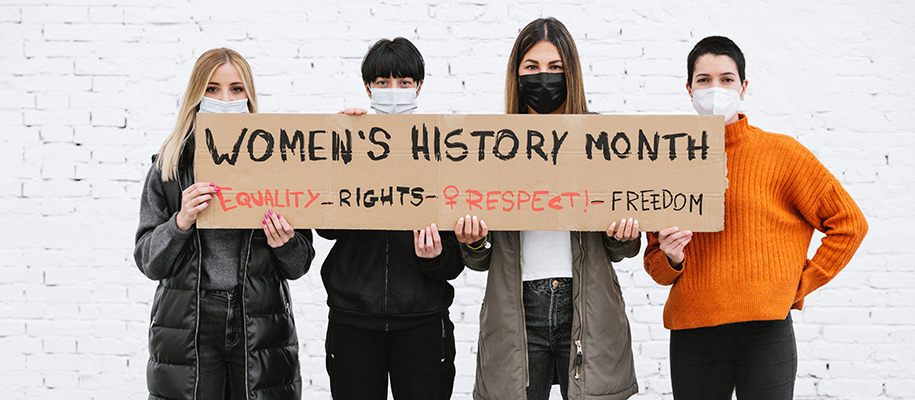
March is Women’s History Month, and for many colleges and universities, this month is an opportunity to celebrate and acknowledge the contributions of women throughout history. Additionally, many colleges and universities also strategize ways to foster a sense of belonging and empower women students from historically marginalized backgrounds to succeed and thrive. Uplifting women on college campuses is the first step to fostering an inclusive campus culture.
What to know about inequality for women
Although women now outpace men in college attendance and attainment, female students still experience significant discrimination and barriers to achievement and career advancement. Women are still underrepresented in traditionally male-dominated fields like science, technology, engineering, and math (STEM); they experience harassment and sexual assault on campuses at a higher rate; their sports are drastically underfunded; and women are likely to be paid less than men even across similar occupations and job titles.
With these persistent inequities, college representatives and parents must recognize the critical role they play in empowering and supporting women students. Research shows that by empowering women, we generate increased job and economic growth, technological innovation, and more legislation focused on social justice. Are you looking for ways to uplift the women in your own lives? Here are strategies to empower and support students during Women’s History Month and beyond.
Teach women to negotiate their salary
Women are less likely to negotiate their salary, as they report feeling less confident about negotiation and asking for more money. Therefore, they’re more likely to stay in a lower-paying job. While discrimination does exist, if women don’t negotiate their salaries, it only further impedes gender pay parity. A survey from Glassdoor reports that 60% of women believe questions about salary history shouldn’t be asked in an interview.
Often when women ask for more or advocate for themselves, they’re stereotyped as ”aggressive” or “unruly.” Women should feel empowered and confident in asking for more money and promotions, as it’ll only increase their potential for career advancement and economic stability. When we teach women how to increase their earning potential, we not only build their confidence but also aid them in generating wealth and achieving financial security. Advocating for themselves and negotiating salary are important skills that college students should learn. Look for resources and organizations like the American Association of University Women, which offers salary negotiation courses for college students.
Related: 4 Smart Tips for Women to Negotiate Salary
Recognize the importance of intersectionality
Intersectionality refers to the phenomenon that women are impacted by a multitude of social identities: race, social class, national origin, and sexual identity all impact how they experience the world as women. While all women experience a pay disparity, Black women face an even more significant pay gap and are currently paid only 63 cents for every dollar paid to White men. While all women continue to face sexual and physical victimization, transgender and queer women of color are more likely to be victimized and experience hateful violence. When we acknowledge the role intersectionality plays in Women’s History Month, we recognize that women experience different barriers based on their social identities, and it demonstrates our ability to be responsive to the specific needs of diverse women.
Support events focused on body positivity
Body positivity refers to the idea that all people should have a positive body image, regardless of popular perceptions of what constitutes ideal shape and size. College students face intense pressure to look a particular way, and this is exacerbated by social media, popular culture, and peer groups—especially for women. A negative perception of one’s body can create feelings of insecurity, anxiety, and depression and can also lead to eating disorders. Colleges and universities can play an extraordinary role in empowering women as it relates to their bodies. Having events that focus on body positivity or showcasing students with diverse body types in college marketing materials is an important strategy for empowering women to think positively about themselves.
Related: Colleges With Events Celebrating Women's History Month
Donate to women-owned businesses and organizations
Women-owned businesses and organizations are growing in numbers, creating more economic growth as well as opportunities for women to hold leadership positions. However, women-owned businesses face significant barriers and often receive little venture capital funding, which impacts the success and visibility of their businesses. Consider hosting an event on campus (or if you’re a student, suggesting one!) and inviting local women-owned businesses or organizations. Colleges could also offer a women-owned business directory for students.
It’s important for female college students to see other successful women as a source of inspiration and empowerment. Student organizations focused on women also need support. Some colleges have organizations like Women in Science or the Society of Women Engineers; consider donating or helping with a fundraiser for one of these organizations. Given that groups like these are focused on the academic and career success of women, donating to these organizations can provide additional resources for these students to succeed.
Advocate against sexual assault and harassment
Sexual violence and harassment affect millions of people each year. It's estimated that about one in three women experience sexual and/or physical violence during their lifetime, while nearly one in five women have experienced completed or attempted rape. More than half of women report experiencing street harassment, with women of color, lesbians, and bisexual women experiencing it at a higher rate. Campus sexual violence is also extremely pervasive. Women ages 18–24 are at an elevated risk of sexual violence, and 13% of all college students experience rape or sexual assault. Preventing sexual violence involves systemic change and targeted policies that improve campus safety and gender bias. Many campuses hold events like Take Back the Night and Vagina Monologues to raise awareness of sexual violence impacting college students. Consider donating to these events or participating in them to show your support for preventing sexual assault and harassment on campus. It's also important to teach college students to be proactive bystanders by standing up and speaking out against violence, as well as be aware of their gender bias and how these biases can lead to creating a hostile campus culture for students identifying as women.
Related: An Important Guide to Student Safety and Support on Campus
The full participation of all genders in society is needed to live a productive life. It’s not enough to simply acknowledge the contributions of women and foster awareness of systemic discrimination facing women—we all need to take an active role in empowering and supporting the women in our own lives. The future and economic success of our nation depends on it.
Looking for more great content about and for women? Check out the blogs and articles categorized under the “Women’s History Month” tag.